
MEDIA ECOSYSTEM / PRODUCT DESIGN
ЭкосистемаФОМ
ФОМ — это не один сайт, а несколько медиа, проектов и внутренних продуктов. Моя задача была собрать для них общую логику, не делая все одинаковым.
- Топ-3
- социологических компаний в РФ
- 5+
- медиа и продуктов
- 10+
- участников со стороны продукта
- Media
- редакционная система
КОНТЕКСТ
Не один сайт, а несколько разных продуктов.
- 01Много стейкхолдеров10+ владельцев продуктов, внутренние команды, внешние заказчики и разные точки принятия решений.
- 02Разные ожиданияУ разных групп были свои стандарты качества, скорости, тона и результата.
- 03Разные аудитории проектовОт исследований российской глубинки до краудсорсинга, медиапорталов и внутренних продуктов.
- 04Одинаковый визуал не решал задачуПродукты должны были оставаться разными, но жить в одной управляемой логике.
APPROACH
Главной стала не одинаковость, а общая логика.
DESIGN PROOF
Медиа-страницы, статьи, состояния, карточки и правила
Длинные экраны показываю целиком: здесь важны навигация, статьи, редакционные форматы, состояния и повторяемые медиа-страницы.
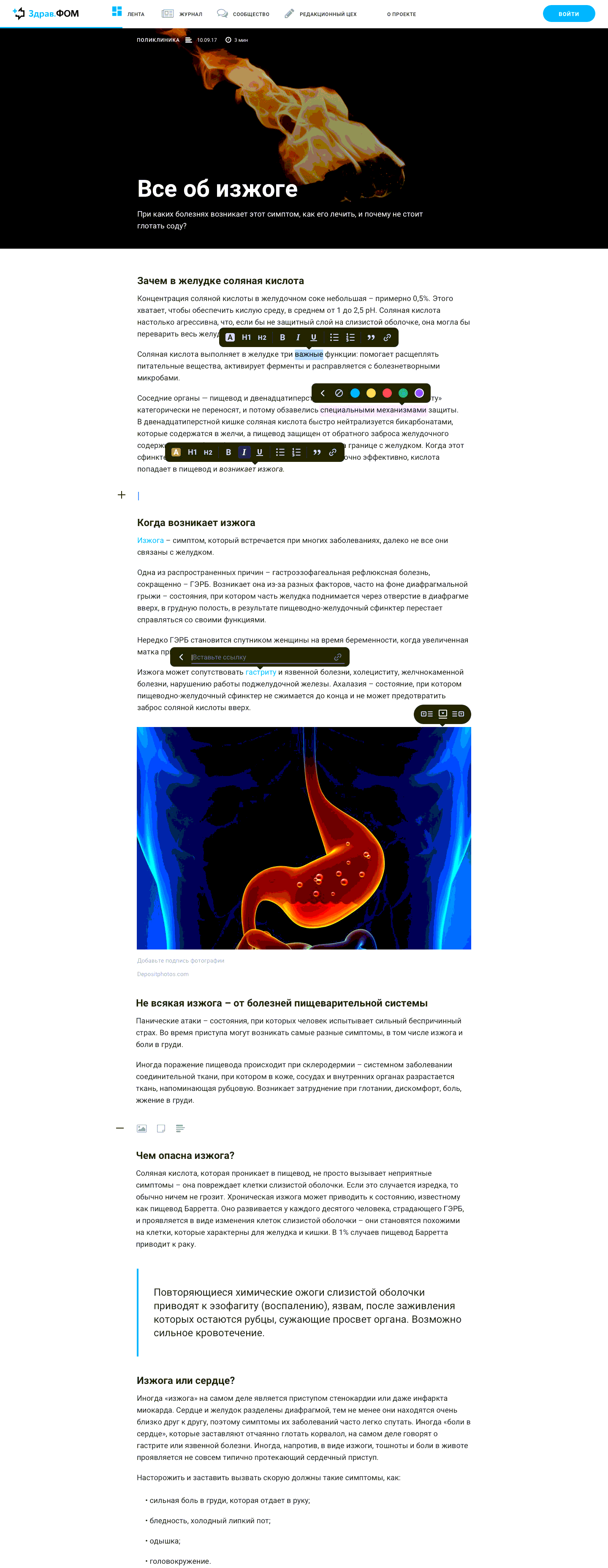
Редакционные экраны продукта
Направление про здоровье должно было работать как полноценное медиа: навигация, статьи, редакционная иерархия и повторяемые форматы.

Страница спецпроекта
Это отдельная страница спецпроекта о здравоохранении: спикеры, партнеры, новости и пресс-центр.

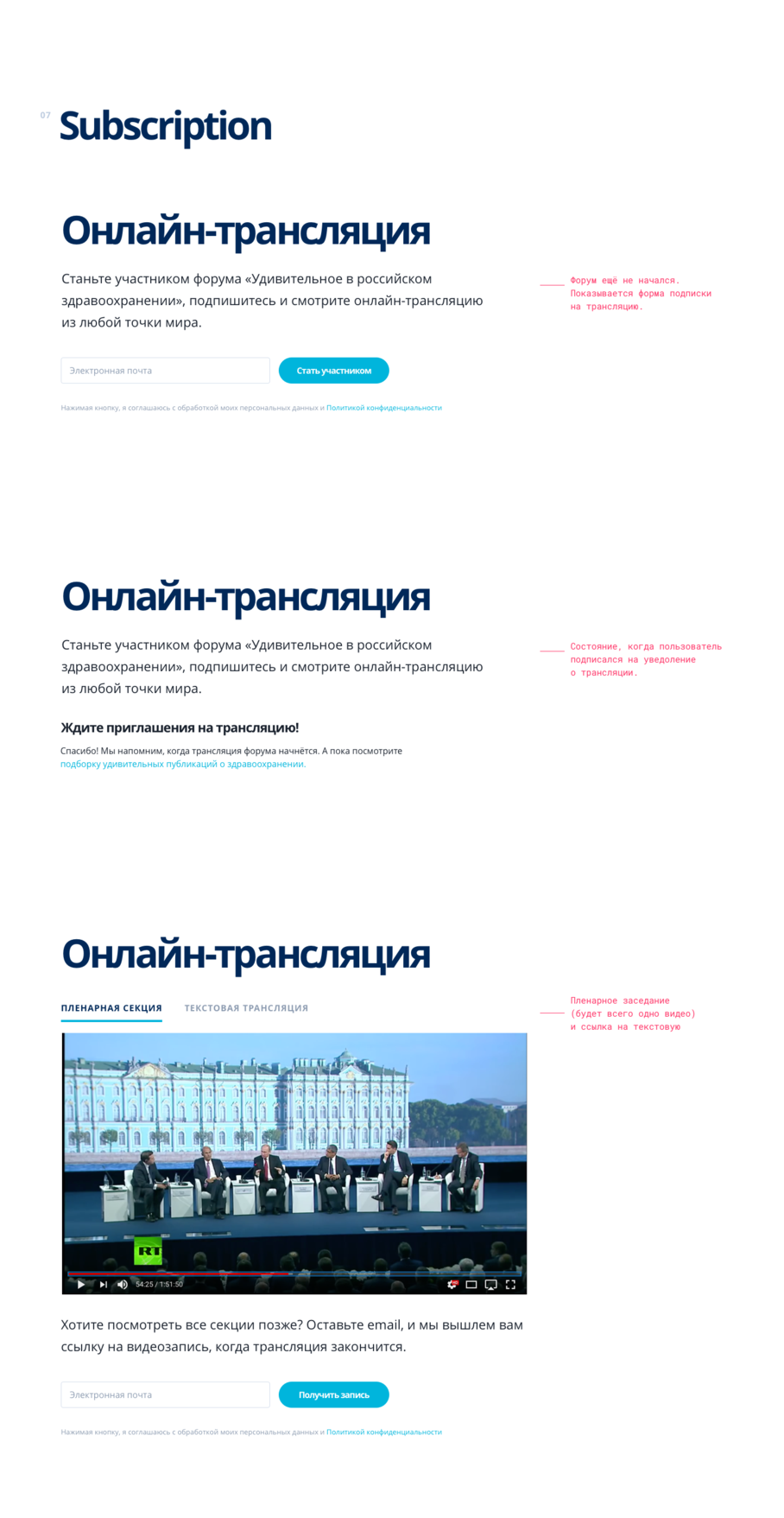
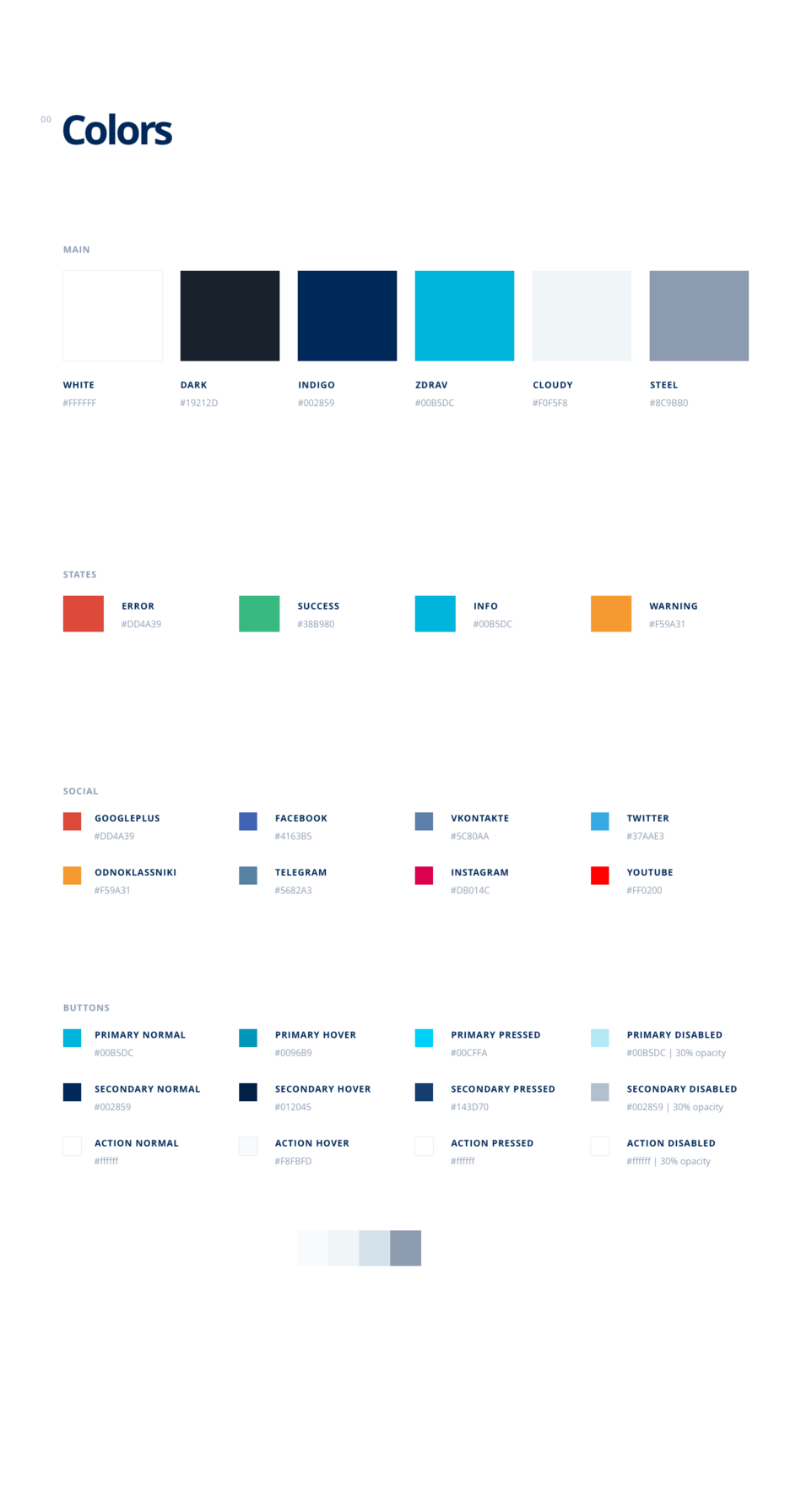
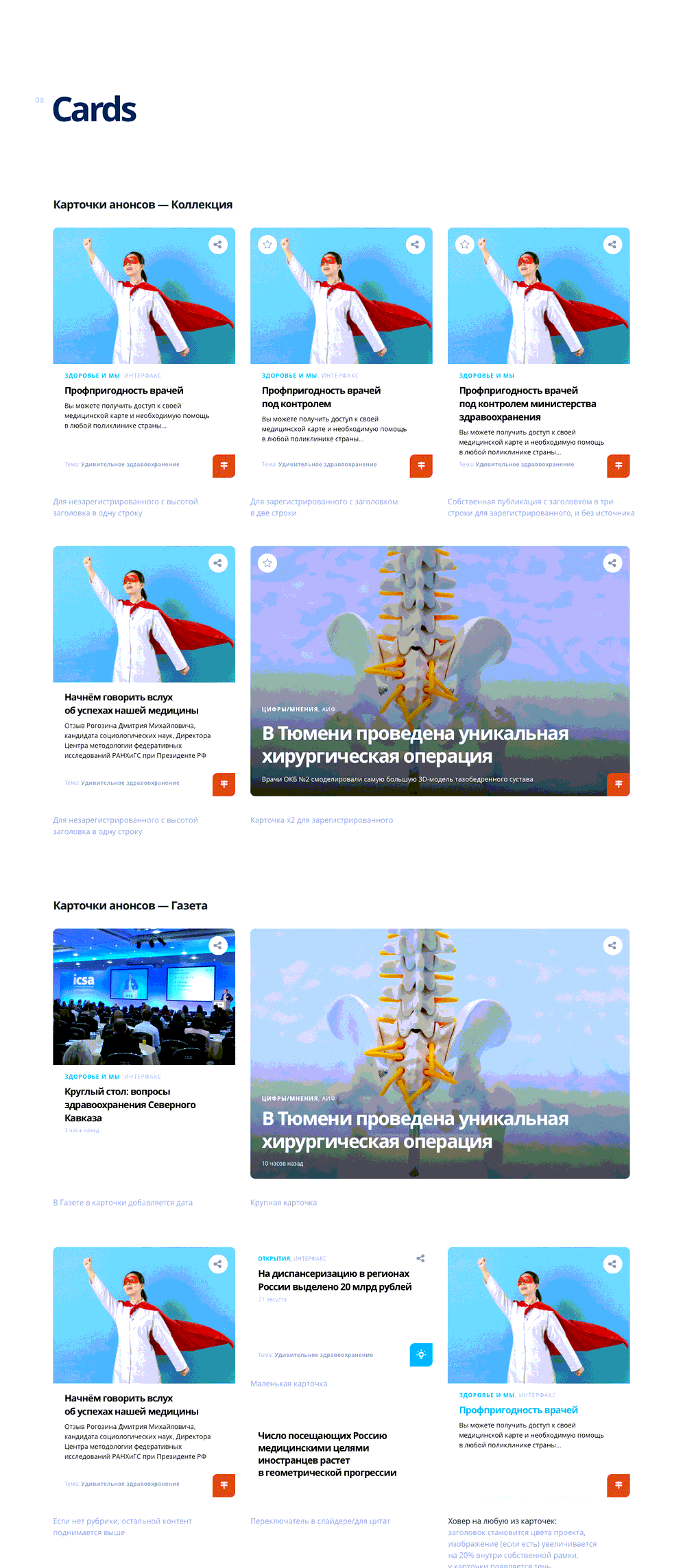
Правила системы и повторяемые состояния
В работе были и практичные детали: состояния подписки, правила цвета, анонсные карточки и поведение контента.
МОЯ РОЛЬ
Я собрала разрозненные продукты в понятную дизайн-логику.
Моя работа была на стыке продукта, интерфейса, согласования людей и визуального качества. Цель была не сделать все одинаковым, а сделать портфель управляемым.
- 01Разобрала продуктовый ландшафтЯ смотрела на портфель продуктов, стейкхолдеров, аудитории и типы задач, чтобы понять, где нужна общая рамка, а где продуктам нужна свобода.
- 02Переводила запросы в принципыРазные пожелания и требования превращались в дизайн-принципы, правила решений и повторяемую интерфейсную логику.
- 03Проектировала редакционные структурыНавигация, логика статей, страницы спецпроектов, карточки анонсов, состояния подписки и повторяемые медиа-паттерны.
- 04Согласовывала разных участниковНужно было удерживать качество и ясность, пока на результат влияли владельцы продуктов, команды и внешние заказчики.
- 05Удерживала логику портфеляИтоговая система позволяла продуктам отличаться визуально, но сохраняла общий стандарт качества интерфейса.
РЕЗУЛЬТАТМедиа-портфель стал понятнееУ проектов появились общие принципы, более ровный UI и основа, на которой проще запускать новые медиа-страницы.
OUTPUT
Что стало сильнее
- 01Единые дизайн-принципыПроекты могли отличаться визуально, но следовать одной логике качества.
- 02Редакционная системаМедиапорталы, статьи, проектные страницы, карточки и состояния стали частью общей логики.
- 03Ясность для стейкхолдеровТребования стало проще обсуждать, сравнивать между собой и переводить в решения.
- 04Больше доверия к продуктуUI стал ровнее и понятнее, а продукты начали выглядеть надежнее.
Готовы начать?
Если нужно собрать несколько продуктов в одну понятную систему, напишите мне в Telegram.
Написать в Telegram