
Практический AI-гайд
22 июля 2026
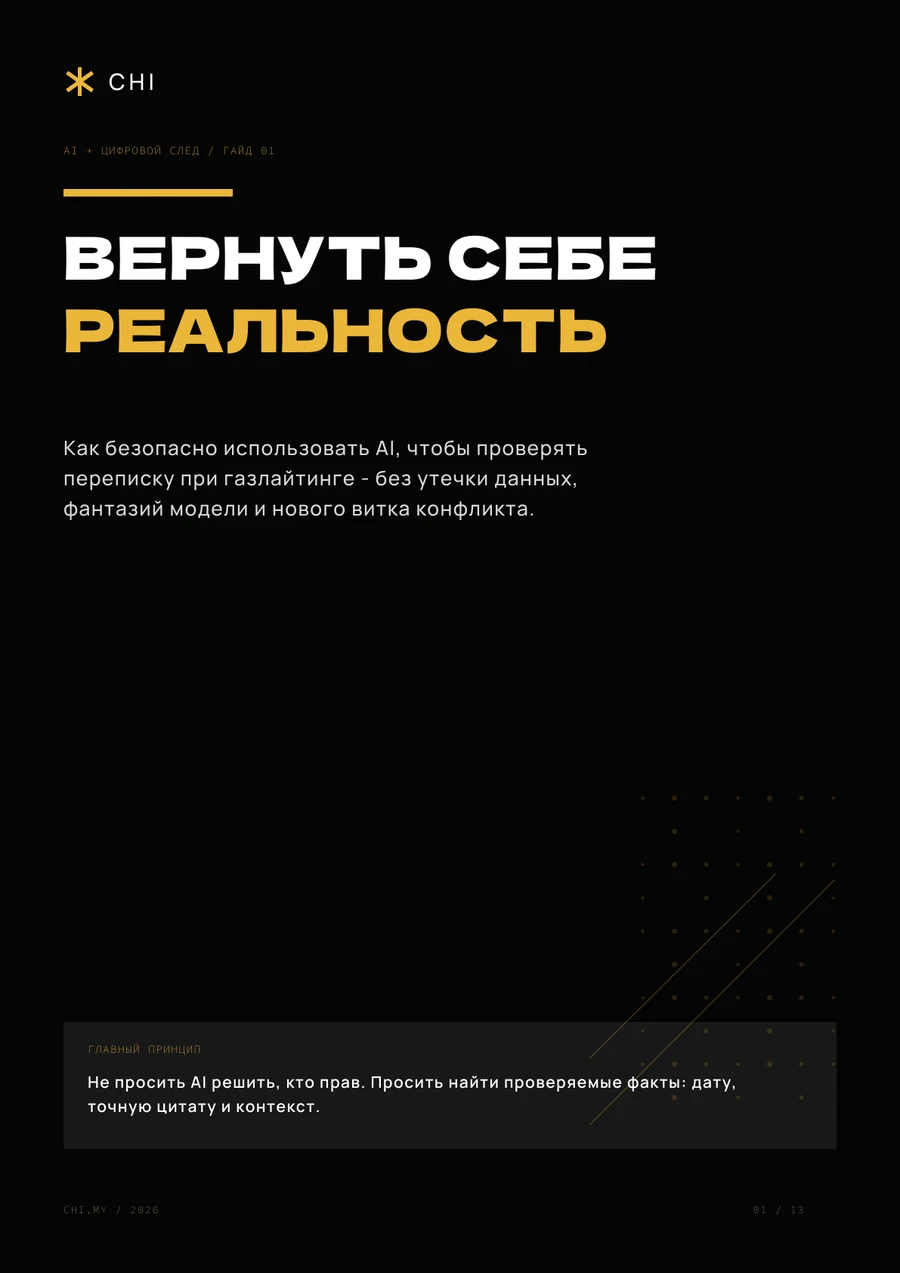
Вернуть себе реальность: как проверить переписку с AI
Газлайтинг заставляет сомневаться не только в конкретном разговоре, но и в собственном праве помнить. AI может помочь собрать цифровой след в проверяемую хронологию — если не отдавать ему роль судьи и не забывать о безопасности данных.
Это не инструкция по тому, как доказать манипулятору, что он неправ. И не способ получить от модели диагноз для другого человека.
Это рабочий метод для себя: выгрузить переписку, найти конкретные формулировки, восстановить хронологию и проверить каждый вывод по оригиналу. Когда вместо тумана появляется дата, цитата и контекст, собственному восприятию снова есть на что опереться.
Главное ограничение простое: AI не устанавливает истину. Он помогает быстрее добраться до проверяемых фрагментов цифрового следа.
Сохранить материал
Полная версия — в PDF
13 страниц: протокол безопасности, экспорт данных, чанкование, мастер-промпт, четыре готовых запроса и таблица проверки вывода.
Раздел 01
AI не решает, кто прав. Он возвращает ссылки на факты
Полезный результат — не уверенный психологический вердикт, а список фрагментов, которые можно открыть и сверить: файл, автор, дата, точная цитата и соседние сообщения.
Что происходит при газлайтинге
Газлайтинг — это систематическая манипуляция, при которой человека заставляют сомневаться в собственной памяти, восприятии и адекватности. Спор постепенно смещается с события на вашу реакцию: не «что произошло», а «почему ты опять всё воспринимаешь неправильно».
Переписка не рассказывает всю историю отношений, но сохраняет цифровой след. Его можно индексировать, искать повторяющиеся формулировки и собирать по датам.
Что искать
- Точные отрицания: «я такого не говорил».
- Фразы, ставящие восприятие под сомнение.
- Обещание, его изменение и последующее отрицание.
- Повторяющиеся оскорбления, извинения и смену фокуса.
Чего не делегировать
- Диагноз собеседника.
- Юридическую квалификацию переписки.
- Окончательный вывод о чужих намерениях.
- Решение о вашей безопасности.
Не просить AI решить, кто прав. Просить найти проверяемые факты: дату, точную цитату и контекст.
Граница метода
Модель может пропустить эпизод, перепутать автора или слишком широко истолковать фразу. Поэтому ее отчет — карта для ручной проверки, а не доказательство сам по себе.
Раздел 02
Сначала безопасность. Потом модель
Название интерфейса — ChatGPT, Claude, Codex или Claude Code — не гарантирует, что данные останутся на устройстве. Сначала нужно понять реальный контур обработки.
Три режима
Самый приватный вариант — модель, которая действительно работает локально, а облачные функции отключены. Облачный business/API-контур может быть приемлемым, если вы проверили обучение, retention, удаление, регион и сторонние интеграции.
Обычный consumer-чат не должен быть выбором по умолчанию для полного необезличенного архива. Политики зависят от продукта, тарифа, региона и настроек.
Перед загрузкой
- Проверьте, имеет ли другой человек доступ к устройству, облаку или резервным копиям.
- Работайте с копией, оригинальный экспорт храните отдельно.
- Для облака замените имена, адреса, телефоны и другие идентификаторы.
- Не подключайте к папке лишние плагины, web search и внешние инструменты.
Что проверить у сервиса
- Используются ли входы и выходы для обучения.
- Каков срок хранения и можно ли его изменить.
- Кто может получить доступ к данным.
- Какие функции отправляют контент третьим сторонам.
Локальный интерфейс и локальная обработка — не одно и то же.
Если устройство контролируют
Если обнаружение файлов может повысить риск, не начинайте с технической настройки. Сначала составьте персональный план безопасности с доверенным человеком или профильной службой.
Раздел 03
Сохраните оригинал. Анализируйте рабочую копию
Надежность начинается не с промпта, а с аккуратной подготовки: исходный экспорт остается неизменным, рабочая копия обезличивается и получает понятную структуру.
Экспорт и чанкование
В Telegram Desktop откройте нужный чат, выберите «Экспорт истории чата», отключите медиа и сохраните JSON для машинного анализа или HTML для ручного чтения. В WhatsApp используйте «Экспорт чата» без медиафайлов.
Очень длинный TXT лучше разделить на последовательные части. Для JSON нужен скрипт, сохраняющий валидную структуру: случайный split посередине файла ее сломает.
Минимальная структура папки
- original/ — неизменный экспорт.
- working/ — обезличенная копия.
- chunks/ — последовательные части.
- index.txt — список файлов и диапазонов дат.
Команда для TXT
split -d -a 3 -l 1000 chat_working.txt chunk_
- -d: числовые суффиксы.
- -a 3: три цифры в имени.
- -l 1000: тысяча строк на часть.
Любая строка будущего отчета должна вести назад: файл → сообщение → дата → контекст.
Если возможен юридический процесс
Правила допустимости цифровых доказательств и записи разговоров зависят от страны. Не редактируйте оригинал и заранее уточните процедуру у юриста.
Раздел 04
Промпт должен требовать источник, а не уверенность
Чем уже вопрос и строже формат ответа, тем меньше пространства для подыгрывания, обобщений и выдуманных связей.
Мастер-инструкция
Начните с общего правила: работать только с файлами в папке, не додумывать мотивы и события, каждое утверждение сопровождать точной цитатой, датой, временем, именем файла и контекстом.
Если данных недостаточно, модель должна прямо написать «недостаточно данных». Найденные факты и осторожная интерпретация выводятся раздельно.
Проверка конкретной фразы
«Найди сообщения [имя] с конструкциями “ты придумываешь”, “тебе показалось”, “я такого не говорил” и близкими по смыслу вариантами. Для близких вариантов объясни включение. Покажи сообщение до, ответ и сообщение после».
Проверка обещания
«Проверь период [дата–дата]. Сначала найди прямые обещания, затем косвенные подтверждения и отдельно отмены или изменения договоренности. Если прямого обещания нет, так и напиши».
Баланс извинений
«Подсчитай извинения каждого участника по заданному словарю. Исключи цитаты, сарказм и случаи, где слово не является извинением. Покажи числа, долю, список срабатываний и спорные случаи».
Формат ответа
- Дата и время.
- Точная цитата без пересказа.
- Автор и два сообщения контекста.
- Файл, message_id и уровень уверенности.
Уверенный тон модели не повышает качество доказательств.
Полезный контроль
Повторите ключевой поиск простым скриптом или другим набором ключевых слов. Совпадение двух независимых методов полезнее красивого объяснения одной модели.
Раздел 05
Проверьте отчет — и не превращайте его в новый раунд спора
Даже точная хронология не гарантирует, что другой человек признает ответственность. Цель метода — вернуть опору вам, а не выиграть презентацию перед манипулятором.
Проверочный цикл
Откройте каждую ссылку, сверьте цитату дословно, проверьте автора, дату, часовой пояс и соседние сообщения. Отдельно помечайте подтвержденный факт, спорную интерпретацию и ошибку модели.
Храните финальную таблицу отдельно от сырых данных. Не отправляйте полный лог в момент конфликта и не принимайте важное решение только на основании AI-вывода.
Что не делать
- Не пытаться «дожать» признание отчетом.
- Не оставлять архив на общем устройстве.
- Не путать количество сообщений с моральным вердиктом.
- Не игнорировать спорные и неудобные фрагменты.
Как использовать результат
- Сохранить проверенную хронологию для себя.
- Обсудить ее с доверенным человеком или психологом.
- При необходимости показать юристу оригинальные материалы.
- Использовать факты при составлении плана безопасности.
Вы не обязаны доказывать свою реальность человеку, который ее систематически отрицает.
Когда нужна помощь
Если есть риск насилия, преследования или контроля устройства, обратитесь к местной профильной службе и составьте персональный план безопасности. В экстренной ситуации звоните в местную службу экстренной помощи.
Факт → источник → контекст → проверка → решение человека
AI здесь полезен не потому, что он «объективнее человека». Он полезен как быстрый индекс по большому архиву — при условии, что мы ограничили задачу, защитили данные и сохранили путь к оригиналу.
Возвращение к собственной реальности начинается не с убедительного вердикта. Оно начинается с возможности снова сказать: я вижу, что произошло, я могу это проверить, и следующее решение принимаю я.